
SAVOIE: LA COMBE DE SAVOIE
Chamoux‐sur‐Gelon
faithful to the House of Savoy in the sixteenth century.
LA COMBE DE SAVOIE – Site 14a
Chamoux‐sur‐Gelon
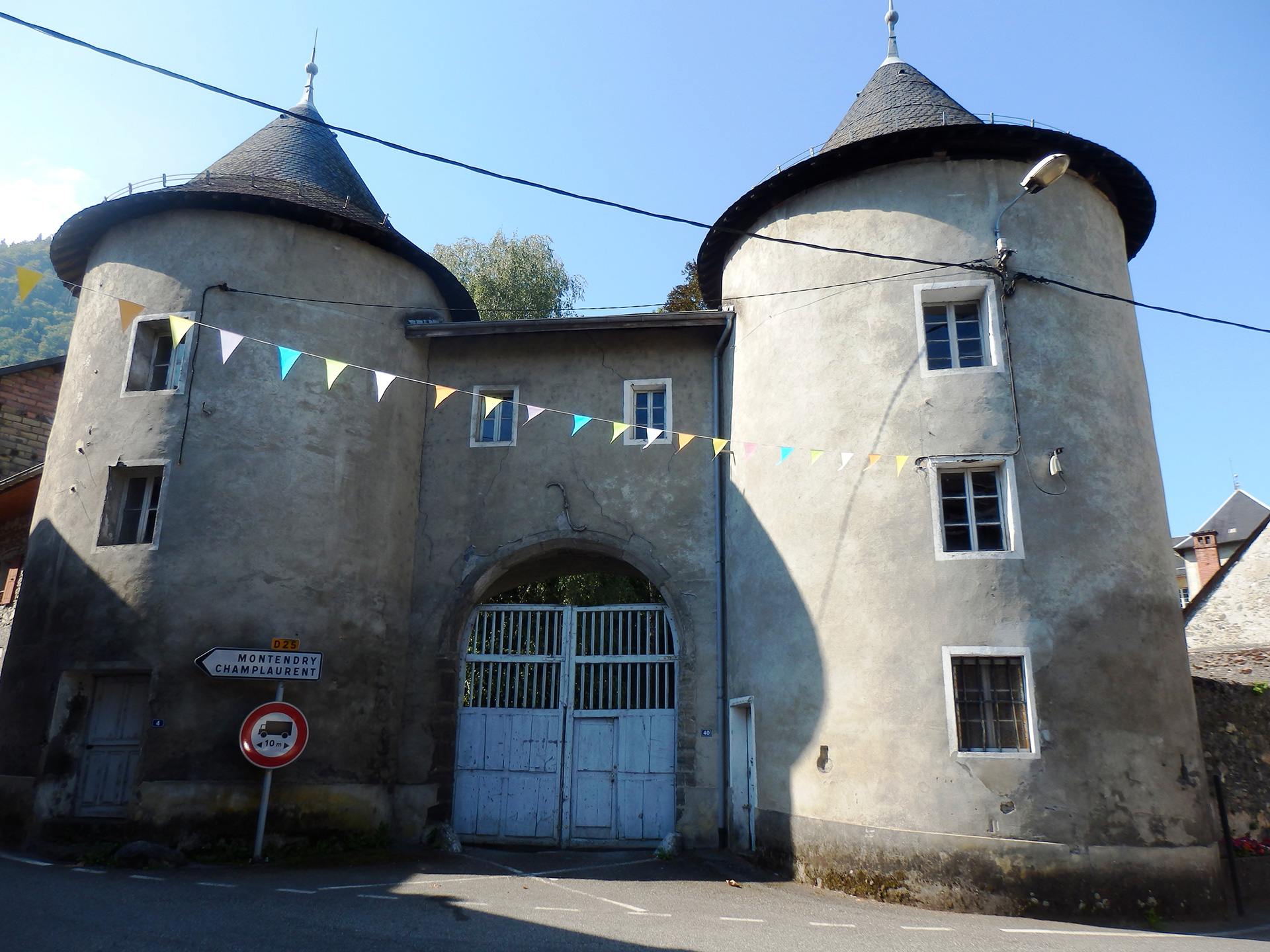 In the Middle Ages, Chamoux was an important stopping place for travellers. It was also where the exchange of goods was protected by a fortified wall around the village castle, the priory, and the church.
The castle of Châteauvieux or Châteauverdon is known to have existed even before the eleventh century. It overlooked the nant (stream) of Montendry, the military headquarters of Lord Andric in the eleventh century, and it became part of that wall in the thirteenth century. Today, only its ruins survive.
The new castle, built in the thirteenth century, is located in the centre of the village. It was a stronghold of great strategic importance, the seat of civil and military administration, and that of the local lord’s justice. It controlled the village and the gorge of Montendry.
Around 1600, it fell into the hands of Maréchal de France de Lesdiguières, who plundered the archives. However, the castle is still magnificent. It belonged to the Seyssel family for a long time. Part of it became listed in 1977, i.e. the façade, the roofing, the entrance with its two towers, the coffered ceilings of the hallway on the ground‐floor, the large sitting‐room, the dining‐room, and the Italian‐style ceiling of the bedroom on the first floor.
The importance of Chamoux‐sur‐Gelon declined when the containment of the Arc and Isère rivers led to the creation of a road on the right bank of the Isère river.

Download the map
VISIT THE ITALIAN WEBSITE
OF THE ROUTES OF THE HOLY SHROUD IN PIEDMONT


